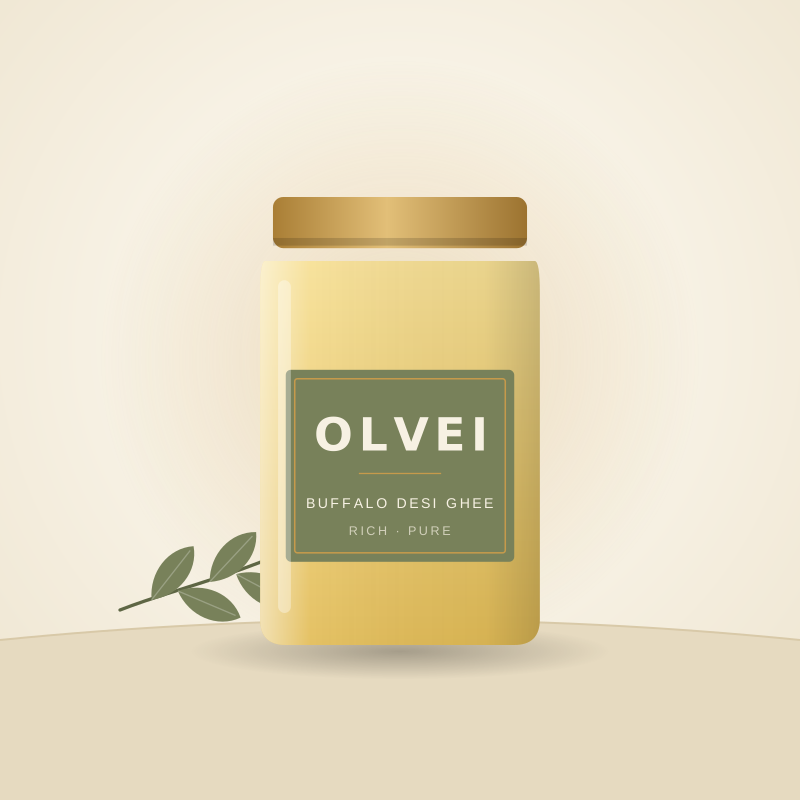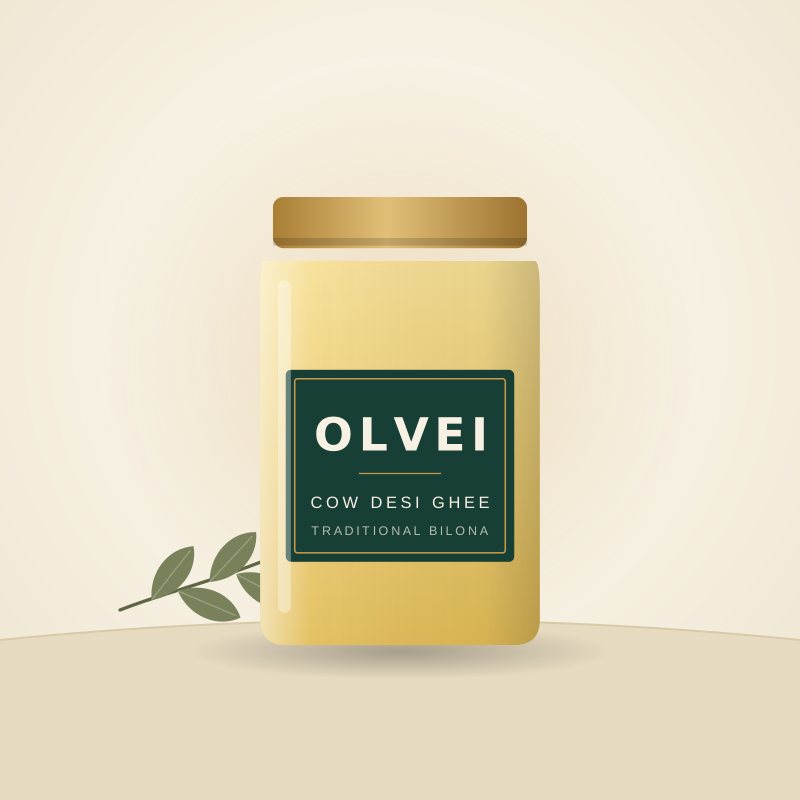
Real desi ghee has a smell that instantly takes you back to a family kitchen. Unfortunately, much of what is sold loose or in unbranded tins is mixed with vegetable fat, starch or cheaper oils. The good news: a few simple checks can tell you a lot.
1. The aroma test
Warm a teaspoon of ghee in a pan. Pure ghee melts quickly and releases a rich, nutty aroma. Adulterated ghee often smells flat or oily.
2. The melt test
Place a little ghee on your palm. Pure ghee starts melting at body temperature within seconds. If it stays solid for long, it may contain vegetable fats.
3. The texture test
Traditionally slow-cooked ghee develops a grainy, danedar texture as it sets. A perfectly smooth, waxy texture can be a warning sign.
4. The heat test
Heat a spoonful in a pan. Pure ghee turns liquid and dark brownish almost immediately; if it takes time and turns pale yellow, it may be adulterated.
No home test is a lab test — but together, aroma, texture and melt will rarely lie.
Cow or buffalo?
| Cow ghee | Buffalo ghee | |
|---|---|---|
| Colour | Golden yellow | Creamy white |
| Taste | Light, nutty | Rich, full-bodied |
| Best for | Daily cooking, tadka | Mithai, biryani |
Taste the difference
OLVEI desi ghee is slow-cooked in small batches and tested for purity.